Solar panels are blocking your house sale
A UCC-1 filing, a PACE assessment or a 20-year lease turns up in the title search and the deal stalls. Sometimes the buyer can't qualify once the solar payment hits their debt ratio. We buy with cash, so the thing that blocks everyone else doesn't block us.
- We buy with our own cash — no lender to disqualify us
- Owned, financed, leased, PPA or PACE
- The solar obligation gets settled at closing
- We'll tell you plainly if the numbers don't work
Got it — Mike will call you shortly.
Usually within the hour during business hours.
Why solar stops a sale that should have been simple
Most people find out the same way. The house goes under contract, the title company runs its search, and a filing nobody remembered signing comes back attached to the property. Or the buyer's lender re-runs the numbers with the solar payment included and the buyer no longer qualifies.
Texas REALTORS has documented exactly this: a seller whose buyer couldn't get a mortgage once the lender treated a 16-year solar lease as a lien on the property. That's not an unusual case. It's the normal failure mode.
The panels aren't the problem. The paperwork attached to them is.
The four ways solar is financed, and what each does at closing
Owned outright
No issue. The system is a fixture like a water heater and generally adds value. One thing worth checking even here: if you had a loan and paid it off, confirm the lender actually filed the UCC-3 termination. Unreleased filings on paid-off loans are common and they still stop a closing.
Financed with a solar loan
The lender has usually filed a UCC-1 fixture filing against the property. It shows up in the title search as an encumbrance. Under the TREC contract forms used in Texas, existing liens must either be paid off by the seller at closing or assumed by the buyer — there isn't a third option where everyone ignores it.
Assumption is possible with some lenders but the buyer has to qualify for it, which brings us back to the debt-ratio problem.
Leased, or on a power purchase agreement
You don't own the equipment. A third party does, and they want either a buyout or a buyer who will take over the remaining term — which can be fifteen or twenty years. Buyers walk away from that more often than sales reps admitted at the time.
PACE assessment
This is the hardest one, and it's worth understanding clearly. A PACE obligation is collected through your property tax bill and, in Texas, carries senior lien status — ahead of the mortgage.
Fannie Mae will not purchase a mortgage secured by a property with an outstanding PACE obligation that sits ahead of the first mortgage. In practice that means a large share of conventional buyers simply cannot buy your house until the PACE balance is cleared or subordinated. Your realistic buyer pool becomes cash.
The part that makes this feel unfair
A lot of these systems were sold hard, to people who weren't told a filing would be recorded against their home, at prices well above what the equipment was worth. Some were sold with dealer fees baked into the financing that the homeowner never saw itemised. Some of the companies that sold them no longer exist.
We're not going to tell you what your rights are, because we're not lawyers and this page isn't legal advice. But if you believe you were misled about the terms, that is worth raising with a consumer attorney, and complaints can be filed with the Texas Attorney General's Consumer Protection Division. Do that separately from, and ideally before, deciding to sell.
We cannot remove a UCC-1, cancel your solar contract, make a PACE assessment disappear, or get you out of a lease. Nobody buying your house can. Any buyer who tells you they'll "take care of the lien" is describing paying it at closing — which comes out of the sale proceeds, which means it comes out of your equity.
What we can do is be a buyer who doesn't get disqualified by the financing rules that disqualify everyone else.
How a cash sale actually works here
We pay with our own funds. There's no lender running your buyer's debt ratio, no underwriter refusing the file because of a senior PACE lien, no appraisal condition about equipment ownership.
At closing, the solar balance is handled the same way any other lien is: paid off from proceeds and released, or assumed by us where the solar lender permits it and it makes sense for both sides. The title company confirms the release before anyone signs. That's the whole mechanism — it isn't clever, it just isn't blocked.
Bring the paperwork to the first conversation if you can: the solar agreement, a current payoff or buyout figure, and anything the lender has sent you about transfers. Sellers who have those to hand get a real number much faster.
When the solar debt is bigger than your equity
This is the situation we see most, and it's the reason this page exists rather than a paragraph on another one. If the mortgage plus the solar balance adds up to more than the house will sell for, a straight cash sale can't close — there's nothing to clear both debts with.
There are structures for that, including arrangements where a buyer takes over payments rather than paying everything off at closing. They are legitimate and they are sometimes the only route. They also carry a specific risk that's worse in a solar situation than a normal one:
In a take-over-payments arrangement, obligations stay in your name. With solar, that's usually two of them — the mortgage and the solar finance agreement. If payments stop on either, the damage lands on your credit, and the mortgage lender can foreclose on a house you no longer own.
Nearly every mortgage also contains a due-on-sale clause allowing the lender to demand the full balance when title transfers. Lenders often don't enforce it while payments are current, but the right is theirs for the life of the loan.
Have your own attorney read any agreement like this before you sign it. Not ours — yours. If any buyer discourages you from getting one, that tells you what you need to know about that buyer.
We do these when they're genuinely the best available option, and we explain the exposure up front rather than after. If that costs us some deals, that's the correct outcome.
Before you do anything
Two things worth doing this week, both free. Call your solar provider and ask for a written payoff or buyout figure and their transfer requirements. And ask a title company to check what's actually filed against your property — a UCC-1, a PACE assessment, a mechanic's lien from a disputed installation, or nothing at all.
You may find the situation is better than you think. You may find there's a stale filing from a loan you already paid off, which is a much smaller problem than it looks.
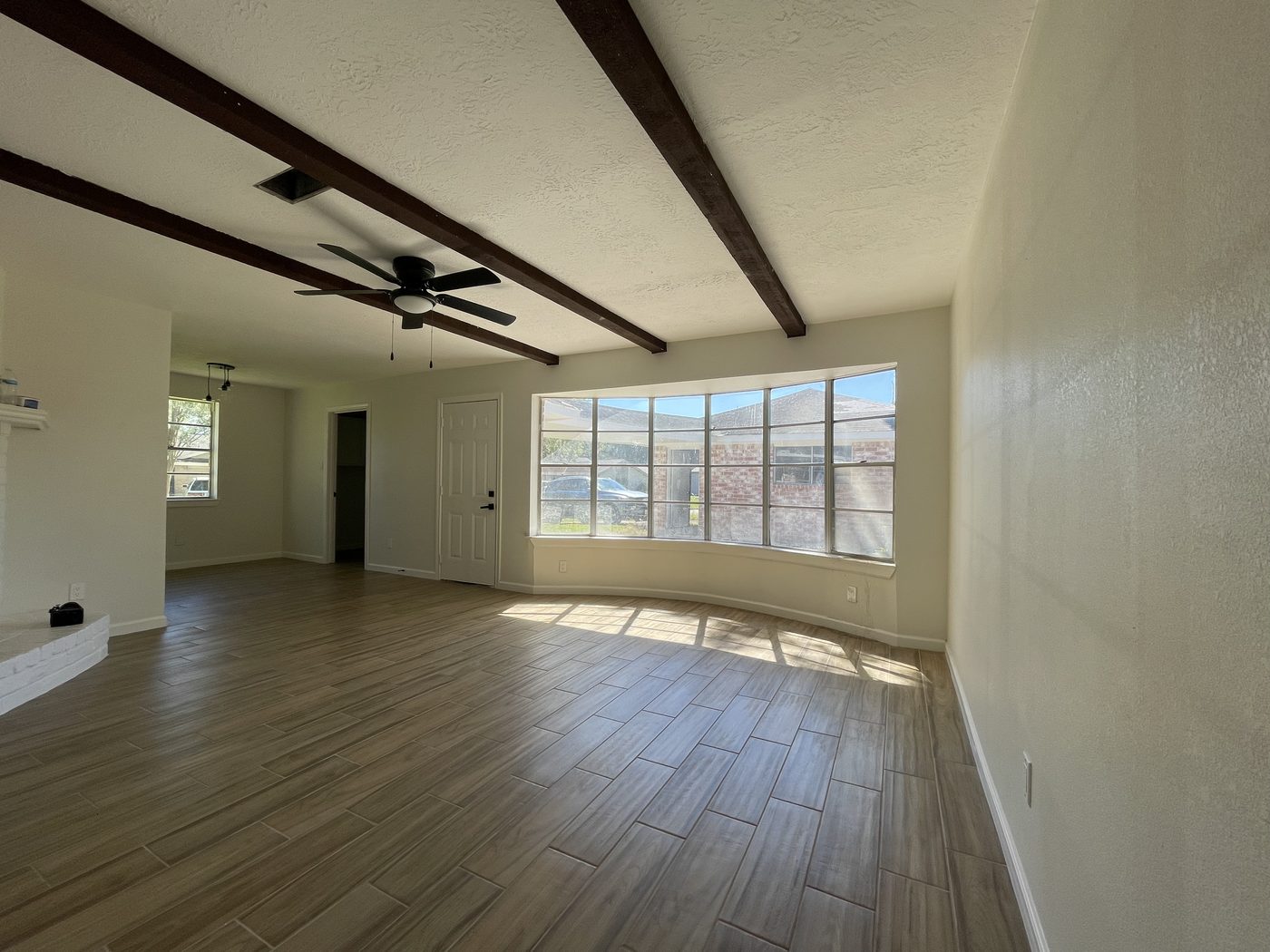
A house no bank would lend against
Hurricane Harvey flooded this Friendswood home and the owner had no flood insurance. No lender would finance a buyer, which is the same wall solar sellers hit. We bought it with our own cash and restored it over eleven months.
Read the full storyQuestions we get asked
Can I sell my house if solar panels have a lien on it?+
What is a UCC-1 fixture filing on solar panels?+
Why can't my buyer get a mortgage because of my solar panels?+
Can you remove the solar lien for me?+
What if I owe more on the solar and mortgage than the house is worth?+
I think I was misled when I bought my solar system. What can I do?+
Do I need to remove the panels before selling to you?+
Find out what's actually possible with your numbers
Free, no obligation, and an honest answer even when it's not the one you were hoping for. Bring your solar paperwork if you have it.